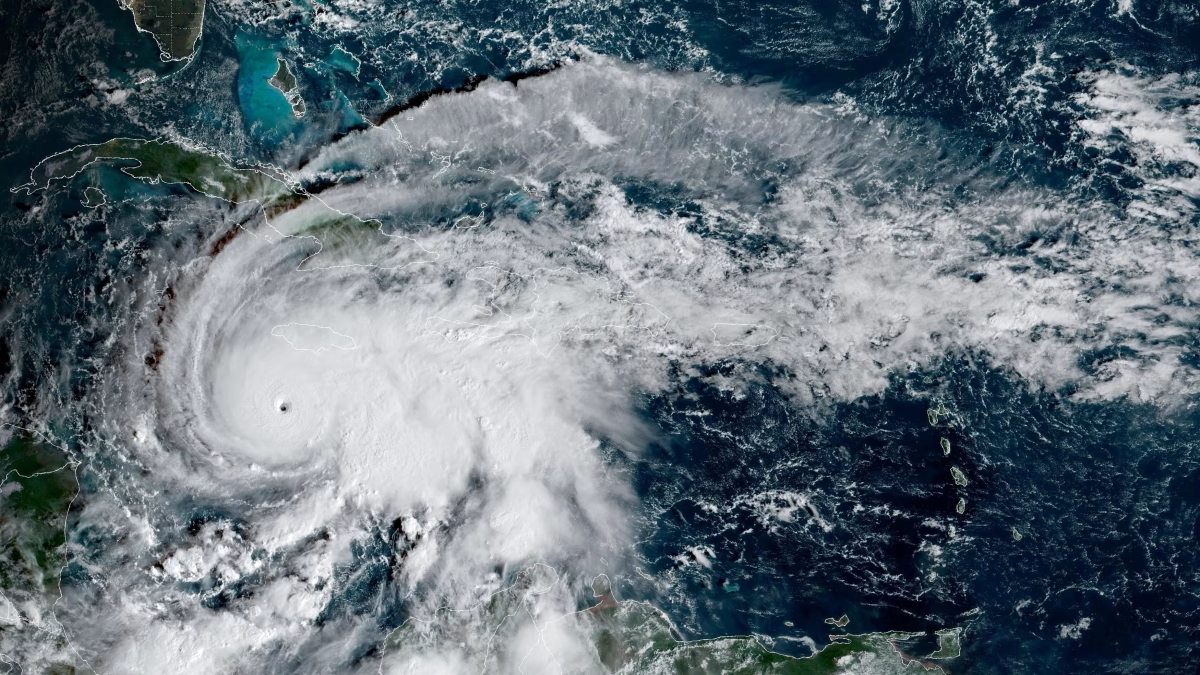
On October 28, Hurricane Melissa made landfall in Jamaica as a category 5 storm. The hurricane had impact on the island with winds up to 185mph, making it the strongest storm to strike the Caribbean. Major flooding occurred in many parts of Jamaica caused by powerful waves. Thousands of homes were completely demolished, and the country’s vegetation and farmlands have been destroyed.
Now, amidst the aftermath of the hurricane, many people in Jamaica and other parts of the Caribbean that were affected by the storm, must rebuild their lives. During the hurricane, over 25,000 Jamaicans were relocated to shelters across the country. Moreover, 40% of the country is without power and many necessary resources such as food and water are scarce. “So many people right now are suffering. There is a desperate need for water and food, and supplies.” stated Robert Ray, a FOX weather correspondent who witnessed the current state of the country. Many organizations are helping supply Jamaica with any necessities that at the moment they are lacking because of the storm. For instance, a U.S. task force has been sent to bring critical supplies to the country and perform search and rescue missions for any missing people.
Currently, the mortality rate as a direct result of Hurricane Melissa is 76 people, with 45 of those confirmed deaths in Jamaica. Desmond Mckenzie, a minister of local government in Jamaica stated, “Jamaica has gone through what I can describe as one of our worst periods. Our infrastructure has been severely compromised.” The hurricane has completely flattened the islands and in many arial images of Jamaica, homes and buildings lie completely in ruins.
The hurricane has not only impacted the state of the country but as well as their economy. Jamaica, a major tourist destination, is reliant on tourism to boost their economy and provides many citizens with jobs. However, because of the intense storm, many hotels and tourist attractions can’t open for tourists. Desrine Smith, a craft vendor in Falmouth, Jamaica, described what life will likely be like without tourism. She stated, “Going days without tourists coming to buy anything means no sales and no money. We survive on daily earnings, and now everything is uncertain.”
The extent of the disaster is immense and many people across Jamaica, Cuba and Haiti all face the repercussions of the hurricane. However, despite all the challenges they have faced the people of Jamaica have preserved through the hardship. The country’s Prime Minister Dr. Andrew Holness stated when referring to a specific town in Jamaica that the people are “strong, resilient and positive in outlook.” It’s evident that citizens spirits are still high even as recovery efforts continue to revitalize Jamaica to what it was like before Hurricane Melissa.