
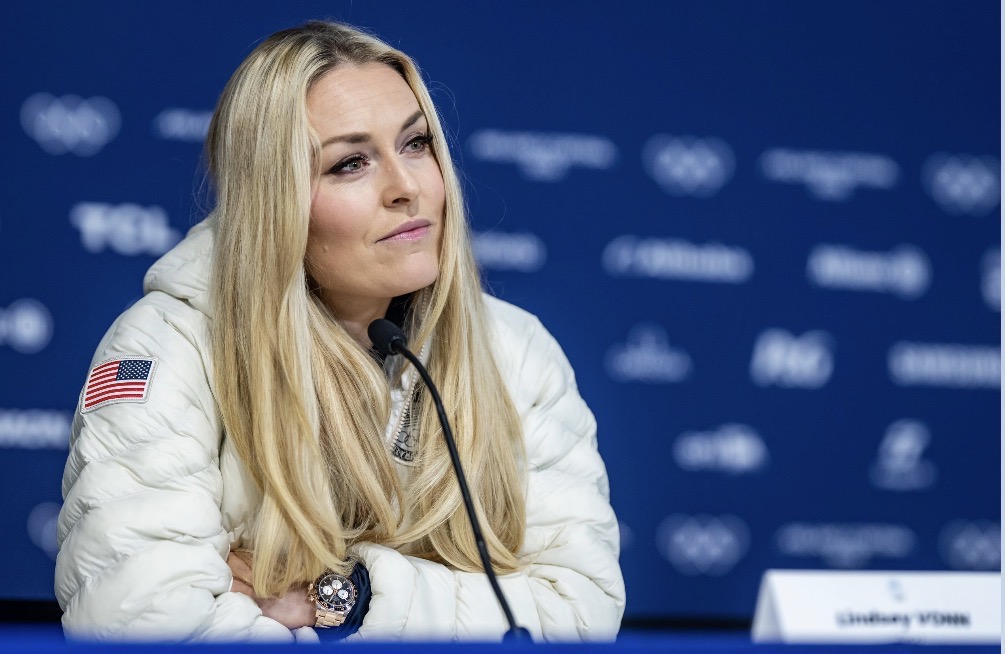
Famous American skier ,Lindsey Vonn, fell 13 seconds into her downhill run on February 8 at the 2026 Winter Olympics in Milan Cortina. She suffered a complex tibia fracture in her left leg. This might initially be seen as a negative impact on her image. However, she has responded in the opposite way, saying “I hope instead it gives you strength to keep fighting because that’s what I am doing and that is what I will continue to do. Always.” This statement reinforces a common behavior pattern that Olympic athletes carry with them. Some other examples of this include gymnast Kerri Strug (1996) who competed a broken ankle and sprinter Manteo Mitchell (2012) finished a relay with a broken leg.
This creates motivation for people around the world to keep going and push through hardships. However, just pushing through is not always the best choice. As when Lindsey Vonn was injured just nine days before her event. She had an ACL injury which is known to hinder movement and athletic performance. As of recently, she has gone through her fourth surgery and is now glad back on American soil.
Lindsey Vonn’s injury reflects the larger culture of the Olympic Games, where pushing beyond pain is often seen as part of the pursuit of greatness. Athletes like Kerri Strug and Manteo Mitchell are remembered for their courage, but their stories also raise important questions about the physical and long-term consequences of competing while injured. While these moments inspire millions with displays of determination and resilience, they also remind us that Olympians are human. Behind every medal attempt is a body that can break and a person who must live with the aftermath. The true strength of an athlete may not only lie in competing through pain, but also in knowing when to heal.