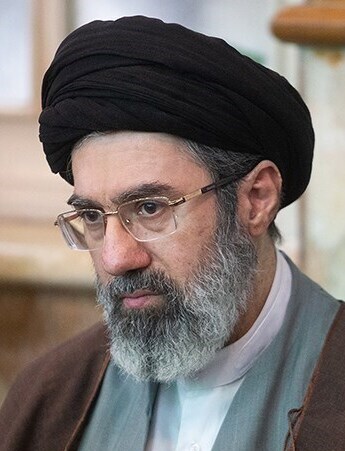
When the attacks in Iran began, the United States and Israel killed Ayatollah Ali Khamenei—Iran’s leader at the time—in the opening attacks of the war. Since then, Iran has chosen a new supreme leader: Khamenei’s 56-year-old son, Mojtaba Khamenei. Iran had been openly warned against choosing him as their leader, and in doing so, showed defiance and likely prolonged the war efforts.
The choice was made by the group of 88 clerics known as the Assembly of Experts. Mojtaba Khamenei himself is a cleric close to Iran’s top military force. Even so, this also has implications from within the country, as Iran is deeply divided between those for and against the clerical ruling system, and choosing Khamenei may deepen the divide even further.
Younger Khamenei is a relatively unknown political figure to both the Iranian people and the rest of the world–unlike his father. As such, worries have risen that he may take a step experts say his father never took, and race to build a nuclear bomb.
The decision has been described as “laden with peril” by Ali Vaez, a senior Iran analyst at the International Crisis Group. Iran’s new leader has not only lost his father to the attacks, but also his mother, wife, and daughter, Mr. Vaez said. That means Iran’s power is now “in the hands of a man loathed by much of his own people and consumed by fury toward Israel and the United States.” In light of this, Trump has referred to this as an “unacceptable choice,” while the Israeli military said they would “continue to pursue every successor.”
Kasra Aarabi, Director of Islamic Revolutionary Guard Corps Research at the advocacy group United Against Nuclear Iran, has described him as “his father on steroids,” and the possibility that the war will resolve quickly has become grim in light of the situation surrounding his rise to power.