
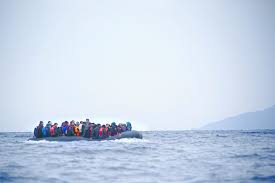
February 6, 53 migrants died in a ship that capsized after departure from Zawiya, Libya. The boat overturned that Thursday night around 11:00 PM in the Mediterranean Ocean, leaving only two survivors. The Libyan coast guard was able to save two Nigerian women as they were transferred into aid. They claimed that the boat was carrying at least 55 people from different African countries. One of the women had lost her husband, while the other woman lost her two babies in the shipwreck. In an attempt to escape the economic downturn and war crisis they crafted a makeshift dingy to cross the sea to Europe in the hopes of reuniting with families, and seeking asylum, jobs, and a better life.
Crossing the Mediterranean has always been a dangerous mission for these refugees, with often deadly weather conditions, such as Cyclone Hary in mid-January.
There’s been a toll of about 38,400 migrants missing or dead since 2014, according to the International Organization for Migration. Numbers have recently spiked again in 2025, rolling into the new year. Over 1,300 migrants have gone missing since 2025 with at least 524 unidentified this year from January 1st to February 10th. “This is the worst start to the year we have seen in over a decade,” An I.O.M spokesperson told Le Monde.
Many migrants have also gone missing crossing the sea from Libya, Europe, and Italy. With some missing from following alternate routes in North Africa and Morocco. Tension has risen in Morocco as women and young girls crossing the sea have been at risk for violence and sex trafficking.
According to the U.N. on Tuesday a U.N. report from the Human Rights office and Support Mission stated that they are at “risk of being killed, tortured, raped or put into domestic slavery.” Some migrant women have been subjected to staying at their home country despite economic downturns.
Countries like Italy have also placed restrictions on migrants crossing over. On February 11, Italy passed a bill allowing government naval blockades on migrant vessels. Prime Minister Giorgia Meloni proposed tightened measures against irregular migration, with a ban of up to 30 days. Any violation of the bill could result in possibly being sent to third-world countries rather than back to home, boat confiscation, and a fine.
Seeking freedom and rehabilitation has cost the lives of thousands of migrants from across Europe and African countries.