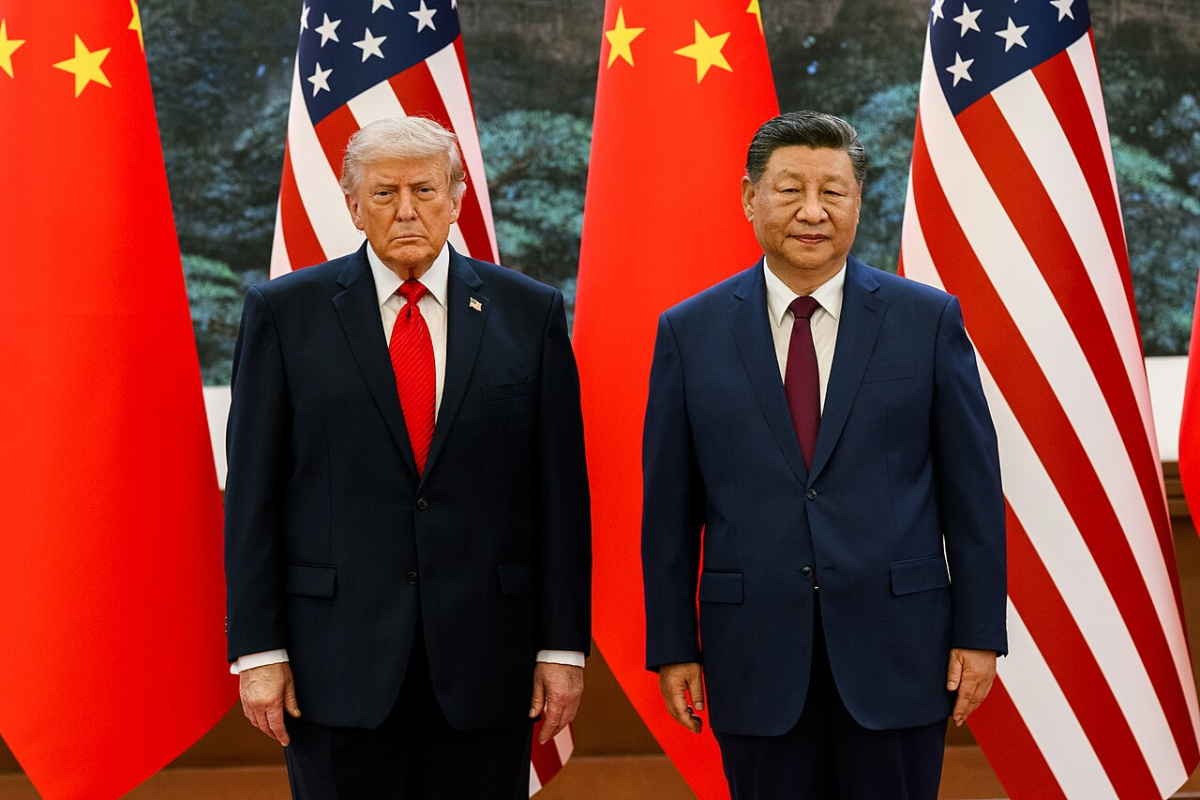
Last Friday, May 15, President Donald Trump claimed that he and Chinese President Xi Jinping had forged some “fantastic trade deals” and shared a desire to end the U.S.-Iran conflict during this week’s upcoming summit in Beijing. After the meeting, both have claimed the meeting as a win and publicly claim to want to stabilize their relationship following last year’s trade war.
The meeting was held at China’s seat of power, the Zhongnanhai Garden compound, on the late morning of the 15. In the meeting, the two were amiable, having tea and walking around the centuries-old garden; however, they ensured they stayed mostly out of earshot of reporters. In a brief remark made before the cameras as they returned for lunch, Trump called the trip to China and the meeting an “incredible visit” and said that “a lot of good has come of it.”
Trump also shared some more specific information regarding the meeting, divulging that China has agreed to buy American planes and agricultural products. This deal is massive, as the White House revealed its specifics entailed China agreeing to buy $17 billion per year of US agricultural products and making an initial purchase of 200 American-made Boeing aircraft. The Chinese government’s official statement did not confirm this, however, simply saying that both sides would “promote expanded two-way trade.”
Both the U.S.’s and China’s official statements are brief and broad, not giving clear insight into any potential breakthroughs when it comes to the rebalancing of trade. “Beyond the warm words, though, little has been said about any concrete agreements. And what has been reported so far has been modest in scale,” said analysts with Capital Economics. Although a “board of trade” and a “board of investment” between the two countries have been planned, poised, and announced by both governments, at this current moment there is no formal announcement of their actual establishment, nor much information that sheds light on how far along they are in the process thus far.
Surprisingly, considering their history and the discussed topics, Trump and Xi supposedly did not discuss tariffs; despite the trade war of last year being a point of contention in their discussion.