Some U.S. states have either decided or have been forced to break the typical 10 year period before redrawing voting districts in 2026 in preparation for the upcoming midterm elections. There is much controversy as the new maps are drawn.
By just this first week in March 2026, at least six states-California, Missouri, North Carolina, Ohio, Texas, and Utah- have redrawn and implemented their new voting district maps. The supreme court has allowed these states to redraw their districts early, but there are several who were denied the same request. These include: Arkansas, Indiana, Kansas, Maryland, New Hampshire, New York, South Carolina, and Washington. As well as two who are planning but have not yet been approved, Florida, and Virginia.
The purpose for these district redraws ties into what is known as gerrymandering, which is when there is political manipulation of electoral districts to advantage or disadvantage a party, group, or socioeconomic class. According to Dr. Herman Kitshoff a Government and Economics teacher, “Gerrymandering is in essence about securing political power, and we have seen it many times throughout history.”
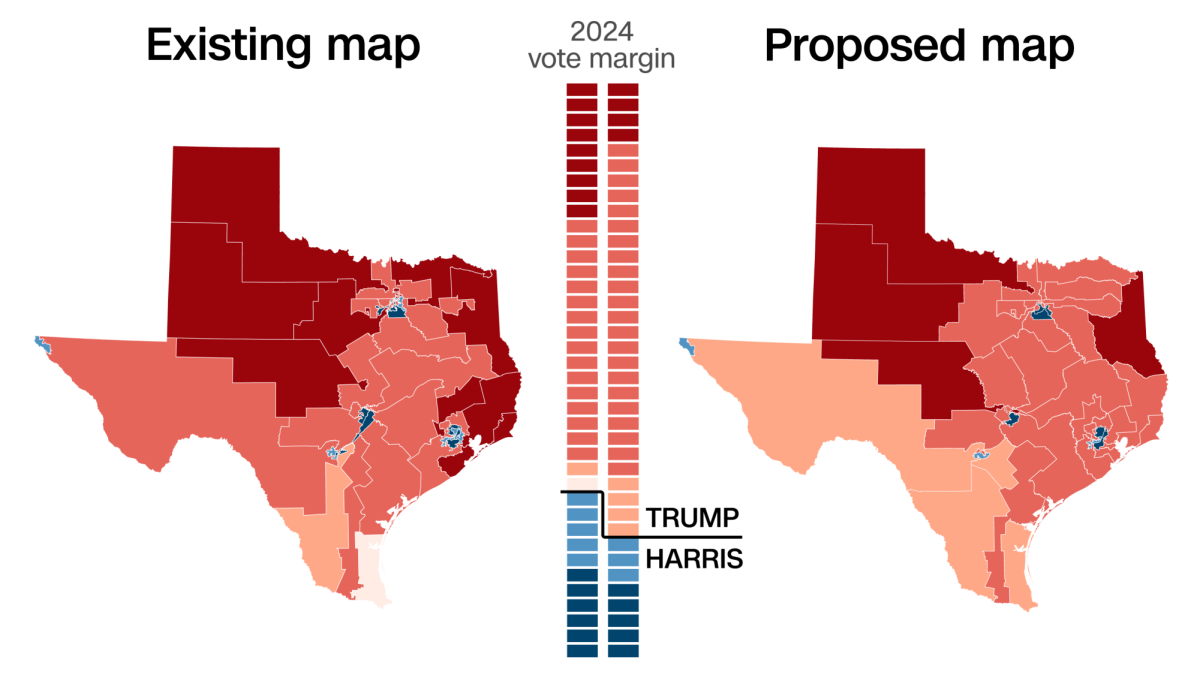
This redistricting debacle began when Texas gerrymandered its congressional map to benefit Republican voters. In response, Democratic-led states began gerrymandering their own congressional maps to counter Republican gains.
California was the first, passing an amendment to redraw the state’s congressional map, then Virginia and Maryland have tried to follow suit. Additionally, Ohio and Utah were forced to redraw their districts as it was ruled unconstitutional.
Most of the Republican redrawing has been accredited to President Donald Trump and his attempts to protect the Republican members of congress. This plan is currently being spearheaded by James Blair and Adam Kincaid, the Executive Director of the National Republican Redistricting Trust. With midterm elections coming up soon, these new districts will have a massive impact on election results.